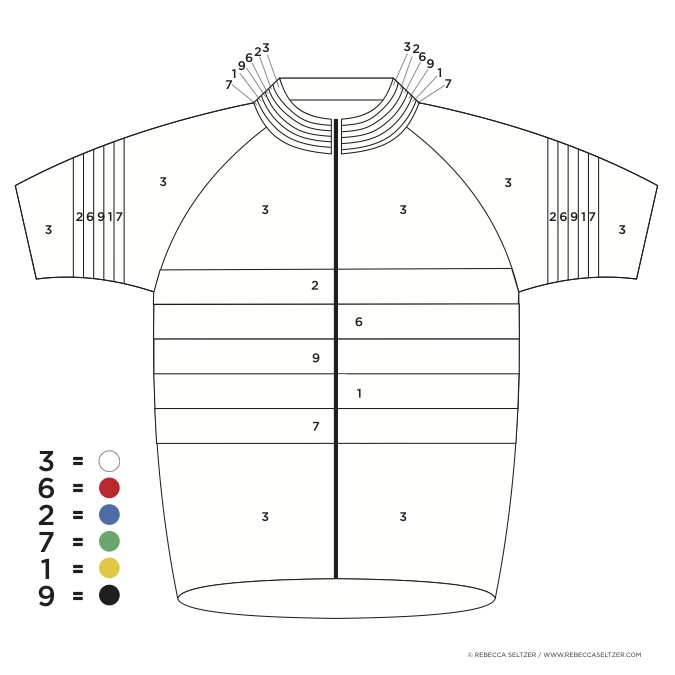
World Champ By Numbers

Rebecca Seltzer/www.rebeccaseltzer.com

Picking favorites for a one day race like the World Championships is tricky.  A cyclist who performs well in late August/early September may be totally out of shape come October.  Riding on to the podium of a race like the Vuelta will leave you in peak condition, but what sort of impact will three weeks of stage racing have on fatigue levels?

Can we use past performances as an indicator of what it takes to win?  Looking at the last 10 road World Champions, there are a few patterns that emerge.
Fotoreporter Sirotti

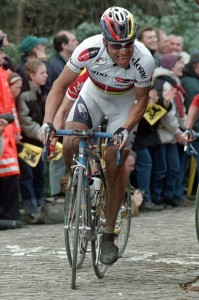
9/10 World Champions rode the Vuelta

In 1995, the Vuelta was moved to September, and the Worlds were moved to October.  This made the Vuelta the perfect race to build form for a late September/October campaign.  Before 1995, the Worlds were in August, making it a well-timed race for Tour de France riders, and a target for greats like Eddy Merckx, Bernard Hinault and Greg Lemond.  These days, it seems like the one-day specialists have a lock on the race.

Only one champion of the last 10 (Romans Vainsteins, 2000)- and an additional 2  (Óscar Freire 1999, Johan Museeuw 1996) since 1995 haven’t ridden the Vuelta.

Is riding the Vuelta the only way to prepare?  Probably not, but its certainly a proven method.


Fotoreporter Sirotti

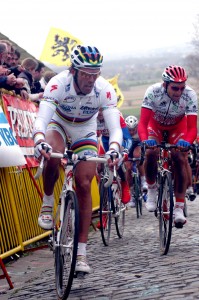
6/10 World Champions won stages at the Vuelta

There’s no hiding form.  6 out of 10 World champs won at least 1 stage at the Vuelta.  Some won more.  If you loosen those requirements a little, 8 our of the 9 Vuelta riding WC’s finished in the top three in one or more stages.

Mario Cipollini won 3 stages in the Vuelta before winning the Worlds in 2002.  Paoli Bettini took a Vuelta stage before each of his wins (2006, 2007), and Alessando Ballan took one before his (2008).   Freire won a stage in 2004, and podium’d in 2001.  Others were a little more subtle; Cadel Evans took a few 3rd places en route to winning the overall 3rd place in the Vuelta (2009), and Tom Boonen came in third just once.

Only Igor Astarloa failed to win or podium on a stage.


Fotoreporter Sirotti

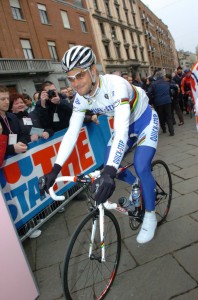
8/10 World Champion’s DNF’d the Vuelta

And while there’s no hiding it, form is fickle.  Peak too early, and you’ll either lose form or overtrain by the time you reach the Worlds.  Back off on training at the wrong time, and you’ll head to the worlds with less than perfect form.

Only Cadel Evans rode the Vuelta to completion, ultimately finishing on the bottom step of the podium.  Every other World Champion Vuelta rider dropped out at some point.  Some dropped out earlier than others, but the last few champions have dropped out somewhere between stages 13 and 17, in order to avoid complete fatigue brought on by the killer hills of the Vuelta.

Dropping out early seems to be part of the Italian Worlds playbook.  Cipollini, Bettini and Ballan all dropped out of the Vuelta – Cipollini did so after stage 7, making his 3 wins even more impressive.  Bettini dropped out before stage 18 for both his wins, and Ballan bailed after stage 15.  Freire 2001 was a stage 15 dropout, Freire 2004 bailed during stage 12, Tom Boonen hung in through stage 13, and Astarloa called it quits during stage 11.
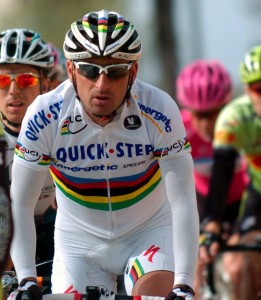

Kent Williams @ procyclingphotos.com

9/10 World Champion’s had full (or close) teams

The rainbow jersey isn’t won without help.  9 out of 10 world champions, Romans Vainsteins again being the notable exception, rode with more than the minimum allowed complement of riders on their teams.  Team sizes have changed over the years, settling on 9 in 2005. The extremes have been mitigated – Vainsteins won on a team of 3, while many of his competitors were on teams of 12.

Some teammates were unequivocally devoted to delivering their compatriot a win, as was the case with the Squadra Azzurra victories of Cipollini and Bettini.  Others didn’t necessarily have total support going in to the race.

Regardless,  the more team mates you have, the more likely it is you’ll have someone to shield you from the wind, or act as a leadout man in the final sprint.


Where’s that leave us for 2010?
2010 Tour de France - Hushovd Wins Stage 3

Fotoreporter Sirotti

Only one rider hits all four markers – rode the Vuelta, won a stage, dropped out, and has a non-minimal team.  That rider is Thor Hushovd.  Thor’s been talking about the World’s being one of his major goals for 2010.  He dropped out after stage 16, quietly suggesting his form was where he wanted it to be headed in to the World’s, and he didn’t want to lose it.

Hushovd’s still thought of as a sprinter – being a two (maybe someday three…) time winner of the points jersey hasn’t helped dispel that – but at this point in his career, he’s really a classics/technical finish specialist, with a knack for taking advantage of the weaknesses of the pure sprinters.  He’s no mountain goat, but he thrives in the sort of power-climb environment that this years Worlds profile seems to offer.

…And Norway’s team, which was originally supposed to be 5, is down to 3. I still think Thor’s the best situated by numbers – his Vuelta stage win had the same sort of selection-forcing climbing in the later kilometers, and he skipped that last week of the Vuelta. He should be fresh, and given his ability to read a race, should be able to stick with the other favorites to keep in contention.

Who else?

Four riders hit important markers – rode the Vuelta, win a stage, have a good sized team.  Gilbert, Farrar, Erviti and Barredo.

2010 Vuelta Espana - Gilbert in Red Jersey After Stage 3

Fotoreporter Sirotti

Gilbert is on just about everyones list for top contender this year.  He was there until the end in last year’s championships, and outperformed everyone in October.  If Cadel’s win salvaged the season for Lotto-Predictor, Gilbert made it almost respectable.  This year, he notched two dominant wins in the Vuelta, and looks poised to have another great fall.

Farrar won two stages of the Vuelta as well – one while going toe-to-toe with a less than humble Mark Cavendish.  Farrar may be able to take advantage of the uphill finish in the last few kilometers of the Geelong
2010 Vuelta a Espana - Farrar Wins Stage 21

Fotoreporter Sirotti

circuit – unlike many sprinters, he seems to do well when the road tilts upward a little bit.

Erviti and Barredo each notched a win in the Vuelta.  Barredo is best known for assaulting another rider with his wheel at this years Tour de France.  Erviti has won a couple of Vuelta stages.  Both will be riding in support of Óscar Freire and/or Sammy Sanchez.  Neither of them would make for an obvious choice for Worlds, but the same could be said for a number of winners over the last 10 years – never underestimate the unsung heroes of the peloton.


Is that it?

Another 15 riders meet some of the markers.

Mark Cavendish and Peter Velits both won stages in the Vuelta, but will be riding on minimally sized squads.

Filippo Pozzato and Fabian Cancellara both had top three finishes, and dropped out of the race early to focus on Worlds.

Vincenzo Nibali, Daniele Bennati, Allan Davis, Matt Goss, Greg van Avermaet and Kevin de Weert all had top three finishes, and will be riding on full sized teams

Finally, Grega Bole, Martin Velits, Manuel Cardoso, Frank Schleck and JJ Haedo all top-three’d, and will be riding with reduced squads.

Predictions?

I predict I can find a stat to support any eventual outcome.  I don’t feel I’m making a particularly bold statement by saying I think the winner will be one of the 20 guys mentioned in this article.  You’ll have to wait until tomorrow for specifics, when we’ll publish the Pavé staff picks for the race!

Are stats total bunk, best left to talking heads looking to fill time between commercials for auto-tinting lenses?  Or do past performances work as an indicator for something complex like bike racing?  Let us know!

Posted in Races | Tagged , , , , , , | 6 Comments

Will the UCI Kill the Radio Star?

Fotoreporter Sirotti


As the radio ban debate is taking full flight at the moment, two opposing parties have been set; The UCI with their desire to rid the peloton of radio equipment, and the riders, teams and most cycling fans who feel that radio’s play a key part in professional cycling.

The UCI’s argument was first implemented at the 2009 Tour de France, on Stages 10 and 13, where the race was to run sans-radios. The immediate reaction from the riders after Stage 10 was extremely strong, with veteran hard-man Jens Voigt stating that “Next they’ll be asking us to ride for two days without helmets, or without cables in our brakes”. The day had not been a great success for the UCI’s new rule, with rider protests such as Rabobank rider Grischa Niermann’s home-made antenna making a mockery of the decision. Voigt also revealed in an interview that “The racing was far less exciting, we were slower and for the spectators that’s less fun. The riders were scared to make a mistake so they ended up doing nothing.” The radio ban’s future was looking quite dull at that point, and the UCI lifted the ban from Stage 13 due to the amount of opposition to the idea.

But now that 2011 has started the UCI are flexing their decision-making muscles and coming up with new and re-vamped ideas, such as the ‘UCI Approved Equipment’ ruling, and of course, the radio ban in .1 and .HC races in the cycling calendar, in addition to the previous radio ban.

The updated 2011 UCI legal document (2.2.024) states:

During the following races:

  • world championships
  • national championships
  • men elite, class HC, 1 and 2 events and events on the national calendar
  • women elite, class 1 and 2 events and events on the national calendar
  • men under-23
  • junior men
  • junior women

the use of radio links or other means of remote communication with the riders is not permitted.

With the exception of the events listed above, a secure communications and information system (the “earpiece”) is authorized and may be used for safety reasons and to assist riders under the following conditions:

  • the power of the transceiver may not exceed 5 watts;
  • the range of the system shall be limited to the space occupied by the race;
  • its use is limited to exchanges between riders and the team manager and between riders of a same team.

The use of such a system is subject to any relevant legal provisions and to thoughtful and reasonable use with respect for ethics and the rider’s freedom of decision.

However, for the individual and team time trials, radio links or other means of remote communication with the riders might be used.

Note that riders are forbidden to use a mobile telephone while riding a race. [Sorry, Cipo.]

The use of any other system is subject to prior authorization from the equipment unit of the UCI in accordance with article 1.3.004.

That’s a lot! To make things clear, these are just a few of the new races that will have to enforce this added ruling:

Jonathan Vaughters spoke freely in a report on Cyclingnews.com stating that he “didn’t really see the big deal” when the ban was originally discussed, and that his main concern “was far more focused on other issues that pertained to the financial health of cycling and anti-doping”, but later realized that doing so “was a big mistake.”

The International Association of Professional Cycling Teams (AIGCP) have informed both the UCI and Pat McQuaid that they do not support the new rulings, with an 18-2 result against it in a vote involving team representatives. A similar study was conducted by the Association of Professional Racers (APR), in which a questionnaire was distributed to riders in Italy, France, Spain, Switzerland, Holland, Belgium and Portugal. The result was a near-unanimous result of 207-40 in favor of the use of “earphones without any restriction.”

On the other hand, Omega Pharma-Lotto star Philippe Gilbert has outlined his support of the radio ban at the team’s press conference in Mallorca, backing up his reasoning with his experiences without radio communication during races such as the World Championships and the Giro di Lombardia. The Classics specialist reacted to statements that racing will be too dangerous without radios with a convincing counter-statement that “it’s also dangerous when the directors tell everyone that they need to be in the first ten coming into a tricky corner. Everyone goes full gas trying to move to the front.”

There have been several compromise situations proposed, for example, allowing riders to communicate via radio with their teammates but with no contact to the team cars. This would encourage the riders to debate and interact as a team when it comes to decision-making, and not resort to being fed instructions by the team car, while still being able to inform riders of crashes and other dangers during the race.

Some compromises have gone a step further to appease the UCI, with Rabobank’s elaborate proposal of broadcasting radio communications during racing, giving fans a new insight into the world of professional cycling whilst strengthening the transparency of cycling as a whole. “They (the fans) can experience more of the race.” Rabobank representative Luuc Eisenga stated “We support transparent communication during races.”

If the ruling is carried through, the new generation of professional cyclists may not be as put-off by the absence of radio communication as more seasoned professionals. This is due to the fact that U23 and junior races are already radio-free, and will be entirely second-nature to them when they step up into the professional ranks.

The ball is firmly in the UCI’s court after AIGCP’s all-too-serious statement of “We the teams are anxious to begin our racing seasons, however we feel that it will be unsafe and unfair to participate in races without the best communication technology available.”

Given the UCI’s current struggles with technology, it’s anybody’s guess as to whether we’ll see a radio-free Europe anytime soon.

What are your thoughts on the subject?  Share them below.


Posted in Featured, Races | Tagged , , , , , , | 9 Comments

Why We’re Cyclocross Fans, and why it’s important to North America

Photo by Sasha Eysymontt | flickr.com/photos/sashae

We recently caught wind of Joe Lindsey’s blog post Why I Love Cyclocross. It’s a response to our colleague Inner Ring‘s post Why I Hate Cyclocross. We feel compelled to chime in.

Here in the United States, bike racing isn’t the biggest scene. There are few large races that attract spectators, major sponsors, and popular media coverage. Sure, there are some – a couple stage races held out in the wilderness a couple thousand miles away, or a big ninety-minute crit held in a city half the continent away, but for the most part, road racing a niche sport with a slim Pro scene spread thinly throughout a huge country. 

The opportunities to be entertained by cycling are those that one makes for one’s self. 

Enter cyclocross. In the United States, cyclocross brings bike racing to the people – in so many ways. It’s the discipline at which the barrier between Professionals and amateurs dissolves a little bit. There’s a healthy and growing pack of UCI races filling the calendar; there’s even a professional series in New England. All this is enough to attract people like Bart Wellens, Francis Mourey, and many more to start their seasons here.

And as cyclocross brings Professional racing into our local parks, it also builds relationships with new riders. It’s undeniably a major avenue for growth of the sport. As the top tier of bike racing is riddled with real politik, strange scandals, backdoor deals, teams collapsing, corporate intrigue, curious economics, and other highfallutin nonsense, here in the United States, cyclocross is the sport of the people. Races can be less intensive to organize than crits or road races, can be held on private property circumventing the need for town permits, and so can be cheaper, smaller, and more ubiquitous. And perhaps most importantly, it’s a beginner-friendly sport. What better way to remove the fear of crashing by making it slow, soft, and in a park? Beginners can get dropped in road races and plod around the route, alone and miserable, never to return to a starting line. In cyclocross, I’d happily wager that it’s as easy to have fun at the back of the race as it is as the front. Quite possibly more. In a country that’s spend a hundred years making people forget about their bicycles by dangling shiny cars in front of their faces and building freeways outside their homes, we have to develop cycling and bike racing from the ground, up. Cyclocross does that. 

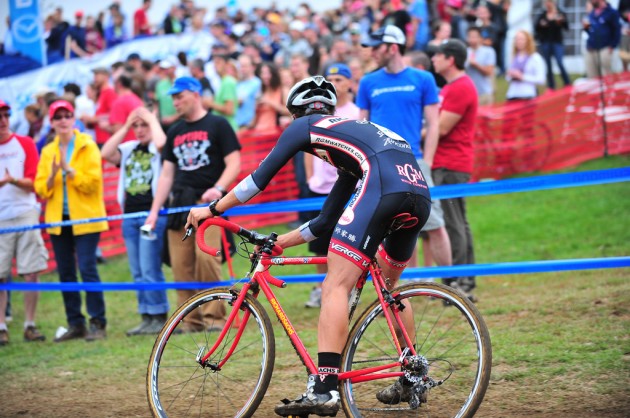
As Lindsey points out in his piece, cyclocross has a lot a lot going for it. It’s dense, all-out racing that is spectator-friendly. We find cyclocross easy to love - around in the dirt on long autumn days, riding over challenging terrain, hanging out in a park with your friends. But we also find it very easy to be cyclocross fans. There’s a chaos to cyclocross that makes it entertaining. It rides like the last hour of a classic race – dense, full-throttle racing, demanding perfection deep into the red. Tangle in a corner, put a foot down in the mud, or bobble in a corner and watch as your favorite rider’s race is nearly over. 

The beauty of the racing, therefore, is that it demands perfection in a way that road cycling can’t match. To watch the top tier of the sport, it’s immediately visible in the combination of fluidity and grace, power, perseverance, pain, and anaerobic awe. We can watch a race take place on the other side of the world, watch the smoothness with which somebody takes barriers or lets their bike float over miserably rutted terrain, and realize that we too can get better. We can take those lessons home – we can go to the park or to the local singletrack. We may not be genetic freaks with huge engines, but if we practice the barriers a thousand times we can go over as smooth as any Belgian pro. We might not do it as fast as they would but if we ride this stretch of trail a few more times we’ll get that corner carved perfectly, with barely a touch of the brakes. 

We are inspired.

Posted in Featured | Tagged , , | 6 Comments

Why the Scheldeprijs Matters

Fotoreporter Sirotti

Editors’ note: Today, Pavé welcomes our new contributor Julius, who offers historical background on Belgium and the races we’ve come to know and love.

It’s easy to imagine Flanders as a magical place where there are bicycle races of all types all year long, where the hardmen on two wheels can always mooch some free Trappist beer from sympathetic barkeepers. It’s also easy to imagine Belgium consisting only of the climbs of de Ronde. There is a lot of truth to this myth, but knowing that Belgium hosts some of the hardest one-day races does disservice to the long, deep, complex, and complicated history of its various parts. Today’s identity of Belgium may have been quantized to only two parties – the northern Flemings and the southern Walloons – but going back even only 60 years will reveal a much more complex and multi-faceted country.

Speaking only a little of any language is a dangerous thing, and that’s how my “discovery” of Belgium started. Educated by Dutch and Belgian priests halfway around the world from Belgium, I can understand some Dutch and Flemish. And whenever I hear names like “Brabantse Pijl” and “Dwars door Vlaanderen,” I instantly thought, where did the names come from and why?

Think of some of the better-known races: de Ronde, Dwars, de Omloop, Gent-Wevelgem, and perhaps E3 Prijs Vlaanderen. These races all started as very much regional races. And so far we’ve only covered races that are in the old County of Flanders, which consist only of the western part of today’s Region of Flanders. Not completely lost yet? Read on. The races mentioned so far all go round and round mostly in the locale known as “Flemish Ardennes”, covering the area just south of Gent, in East Flanders. Remember what I said about the old County of Flanders being in the western part of the Region of Flanders? That’s right: both provinces of West and East Flanders reside in that western part.

So what is there in the east then? That’s where the old Brabant existed, as does the historical city of Antwerp, which used to be the richest port in the world. What do they have to answer to all the bike races in western Flanders then? They gave one answer each: Brabantse Pijl and de Scheldeprijs.

Each race has its unique character, but we will focus on de Scheldeprijs – although Chavanel’s solo win in Brabantse Pijl in 2008 in front of a charging peloton brought tears to my eyes. De Scheldeprijs has significant historical meaning – it used to traverse along the river Scheldt, which used to feed the wealth of Antwerp until its northern banks were blockaded by the Dutch. Halfway into the war of Dutch independence from Spanish rule in the 17th century, a long 80-year war, the Spaniards managed to hang on to the southern part of the Low Countries, roughly today’s Belgium. The Dutch, however, wanted their own ports to grow, and thus blockaded de Scheldt. Ships from the north sea no longer was able to enter the Scheldt, and thus Antwerp could no longer feed the waterways to the heart of Germany with riverine trade.

The average cobbled classic fan may at this point ask, why all this historical detour? There are many answers. Or rather, questions. First one: have you ever wondered why sporza.be thoughtfully captions Flemish-speaking post-race interviews in Flemish? The reason is that the dialect from the old Duchy of Flanders and the old Antwerp and the old Brabant are so deep that they can’t fully understand each other on TV or radio. Or sometimes, not even in person.

Secondly, have you ever wondered why Peter van Petegem is so tanned and hairy? Consider that perhaps an extra 150 years of Spanish rule perhaps has a contribution.

Finally, almost all the hills of Flanders are confined to that small space called the Flemish Ardennes. That means that de Scheldeprijs is pancake flat. Further, the Antwerp area is very sandy, making it one of the centers of the world for glass production. Thus, farming was never a big focus here. This also means that cobbled roads were very quickly replaced by asphalt.

All these factors conspire to make de Scheldeprijs a race that is nothing similar to de Ronde, and nothing similar to Paris-Roubaix either. So what is a contender of the cobbled classics to do, then? In the absence of any other decent Wednesday race alternatives, most of them still gamely show up just to get the legs spinning. But whether the true contenders will take a risk is a different matter. On the other hand, Ghent-Wevelgem offered plenty of familiarity: cobbled climbs. Which leads to the question – what’s the best schedule for the weeks leading up to the Ronde and Paris-Roubaix?

Posted in Featured, Races | Tagged , , , , | 1 Comment

Why Specialized? Why?

I have to admit, I was pretty disappointed by the news this morning that Specialized was ending it’s agreement to supply bikes for Team Quick Step. I wish I could say I was surprised though. As soon as Specialized inked a million-dollar deal to provide bikes for Alberto Contador, I knew the writing was on the wall. At first I had hoped that Contador’s S-Works contract was a sign that he would indeed be joining Patrick Lefevere’s Quick Step squad for 2010; however, it now seems clear the signals pointed in exactly the opposite direction: not only won’t Quick Step be riding with Contador in 2010, but they won’t be doing it with Specialized either.

Why am I disappointed? Well, I’ve always had a soft spot for Lefevere’s Belgian super-team. Going way back to Mapei-GB, I’ve admired Lefevere’s ability to put together a squad capable of winning so many different races (except in July—hence the desire to lure Contador). During that time, I’ve been a Specialized fan as well, selling, fixing, and riding them off and on for the past 15 summers. I’ve always considered Specialized to be the anti-Trek, more concerned with selling an experience than developing a product with a “name” that everyone thought was “cool”. I have been also impressed to see Specialized’s managers stay true to their mission through their choice of sponsorships. Aside from the Mario Cipollini years, when Specialized decided to go full-bore into the Pro Tour ranks, they chose Festina, Gerolsteiner, Quick Step, and Saxo Bank to open the world’s eyes to their bikes—quality programs, that despite the odd scandal here and there, put forth consistent, successful, and well-respected teams at a time when Trek seemed more content to sponsor a “rider” than a “team”.

But lately, it seems that Specialized feels the only way to beat Trek at the publicity game is to mimic its sponsorship strategy, narrowing its gaze (and opening its wallet) for the sake of three weeks in July. Yes, an argument could be made that a Quick Step sponsorship entails narrowing one’s gaze to three weeks in April, but those three weeks are largely responsible for giving Specialized the European credibility it lacked for many years. And does signing Contador—and inevitably Astana—equal a “no-confidence” vote for Andy Schleck’s Tour chances? Or is Specialized hoping for an all-S-Works podium in 2010, a feat even Trek couldn’t pull-off?

And what of Lefevere? He’s been spurned twice now: first by Contador, then by Specialized. Eddy Merckx quickly swooped and signed a 3-year contract with the team, returning the Cannibal’s bikes to the sport’s top-level–and why not? If you were Eddy Merckx Inc. and you were watching Ridley slowly eat into your domination of the “Made in Belgium” market, wouldn’t you want Tom Boonen and Stijn Devolder riding your bikes in the races your fans care about most?

But while there is perhaps a happy ending for Quick Step and Merckx, the logic behind Specialized’s choice still escapes me. First off, who will fill the void left by Quick Step in the cobbled classics? Maybe Fabian Cancellara, but it remains to be seen if he has a team able to dominate like Quick Step has the past two years. And yes, Contador has won the Tour twice and appears to be the most talented Grand Tour rider since that American guy who rode bikes made by that other American brand. But does Specialized really want the baggage that might come along? Contador’s played a 3-month game of cat-and-mouse with the press and the 4 teams most eager to sign him (one of which being a team Specialized already sponsored and could have easily given the extra money needed to make the deal go through). He’s also demonstrated some immaturity and slight arrogance by picking a fight with the one rider possessing the talent, the team, and the connections necessary to topple him next July. And most of all, Contador’s displayed a complete lack of judgment by apparently agreeing to a contract with Astana, a team that hasn’t been guaranteed a Tour invitation yet and boasts not one, but two high-profile, convicted dopers. It sounds like exactly the kind of guy an American brand from Northern California would want to trust with its image and branding, right? In the end, I guess it all comes down to wins; something Specialized was not lacking from it’s other deals, but will certainly be banking-on this July.

Overall, to me it seems to be the kind of move reserved for a company more concerned with image than substance and less worried about maintaining a network of dedicated fans and owners. Maybe they want to attract folks who ride their bikes because “that guy does too” and not because of the bikes—or the company—themselves. Maybe I’m just being naïve. Maybe I’m more of a curmudgeon than I give myself credit for.

In the end, it looks like Specialized—rather than follow the road less traveled—has instead opted for the 4-lane, concrete superhighway to “mainstream popularity” constructed by Trek over the past 10 years. Today that highway has led them to Contador and Astana—a rider and a team that even Trek had the good sense to abandon. What does that say?

Congratulations, Specialized! You were the only major bike company that I thought did things “the right way”. Now it appears you’re just like all the rest.

Anyone selling a Team SC?

Tagged , , , , | Leave a comment

Wheels – Fit to be Tied

All photos from Handspun’s Flickr

Brief posts this week as I’ve entered the final countdown for the Rapha Centre Ramble tomorrow. After a doctor’s appointment this morning I’ll make a beeline for State College and the Rapha Conti crew.

For now, a question remains, one that perplexes many a rider about to embark on a long ride in adverse conditions: wheels. What should ride? The Ramble has some serious climbing, so an argument can be made for lightweight (Shimano Dura-Ace Scandium); but there’s also roughly 25 miles of dirt roads that make a case for durability and comfort (Mavic Classics Pro SSC’s).

Both sets are some of the best wheels I’ve ever ridden, and both are more than worthy of making the trip.

It all gets me thinking: is there anything more classic than a nice set of wheels? Recently, I discovered that Competitive Cyclist has been offering sets of tied and soldered wheels. Talk about one of cycling’s lost arts!

They’re made by Handspun and boy are they beautiful! Handspun also made a set of classics wheels for Embrocation‘s Jeremy Dunn before he left for his week at Flanders, Gent, and Roubaix. Here are some photos from their Flickr photostream:


Link
Nice choices, Jeremy.

Handspun offers several classic versions to suit your needs. As time passes, we plan to include reviews and articles about various classic and neo-classic wheel and tire options from Shimano, Mavic, Handspun, Challenge and more. But for now, you’ll have to be content with just drooling over these samples.

What’s your favorite set of wheels for the pavé?

Tagged , , , | Leave a comment