The 2010 Giro d’Italia – 5 Riders to Watch

The favorites for this year’s Giro d’Italia are well-documented—Evans, Basso, Sastre, and the rest have already received more than their fair share of press in the week leading-up to this Saturday’s Partenza in Amsterdam. Thus, a more interesting conversation might be which young riders will shine in this year’s race, perhaps revealing themselves to be future contender for the maglia rosa.

Here are 5 riders to watch:

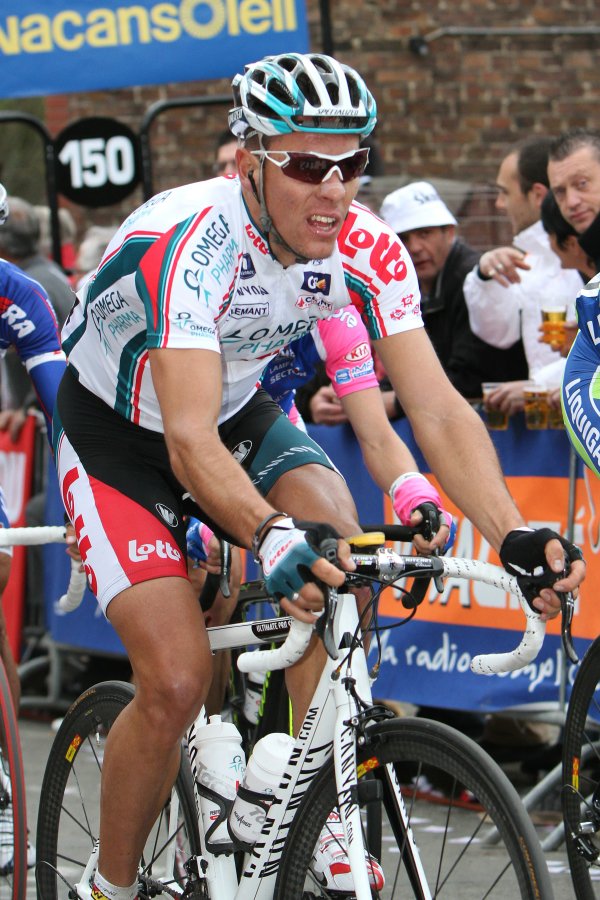
1. Jan Bakelants (Age 24) spent the last season-and-a-half riding for Topsport Vlaanderen following wins in the Liège-Bastogne-Liège, the Circuit Ardennes, and most importantly, the 2008 Tour de l’Avenir as an amateur. This past off-season he jumped to the Pro Tour, signing a contract with Omega Pharma – Lotto, with whom he’ll ride this year’s Giro, his first Grand Tour. Bakelants is one of a rare breed of Belgians who prefers hills and time trials to the cobbled, one-day races most often associated with his compatriots. As a result, he’s perfectly suited to stage races. Granted, a 3-week Grand Tour is a much more serious endeavor than a 7-day stage race, but with a squad looking for little more than daily stage victories, Bakelants might have some freedom to try his hand at a good GC result. Top-20 would be a terrific indicator for future success in a race where other Belgians—such as Jurgen Vandenbroeck and Kevin Seeldraeyers—have performed well lately.

2. Sasha Modolo (Age 22) burst onto the scene this season with several top-10 results in Tirreno-Adriatico before taking 4th-place in Milan-San Remo. Considering the intense competition he faced in those events, the young sprinter from Colnago – CSF Inox is clearly ready for the big time. And he’ll get his chance to prove it as the Giro will be his first Grand Tour and aside from Milan-San Remo, he’s never raced on such an important stage. While a professional win has continued to elude him, a Giro stage victory would be a fitting reward following the Italian’s impressive spring. At the Giro he’ll have Greipel, Farrar, and Petacchi to contend with—wouldn’t Italy love to see the baton passed from Ale-Jet to a young successor?

3. My gut tells me to keep an eye on Branislau Samoilau (Age 24). Maybe it’s because he is a young climber who can time trial; maybe it’s because he’s Belorussian—we have been witnessing a bit of a renaissance for riders from former Eastern Bloc countries. Or maybe it’s because he rides for Quick Step—no, it’s not that actually. Regardless of my reasoning (or lack thereof), Samoilau bears watching. He’s performed well in the past three years in various second-tier races including the Tour of Austria, Settimana Lombarda, and some smaller Spanish stage races. More importantly, in 2007 he finished 22nd in his one and only Giro d’Italia—at the ripe “old” age of 21. Like Bakelants, he rides for a team largely devoid of any real goals for the Giro other than giving several men used to playing supporting roles opportunities to win stages and perhaps ride to a high GC placing. For Samoilau, a top-15 finish could be in reach, especially with an individual time trial on the race’s final day.

4. Francesco Masciarelli (Age 24) won the Mont Faron “Queen” Stage of the Tour de Mediterranean in February, beating Rinaldo Nocentini, Alejandro Valverde, and Maxim Iglinsky in the process. The youngest of 3 brothers—all of whom are professional cyclists—and the son of former Italian professional, Palmiro Masciarelli, Francesco’s pedigree is clearly top-notch. Masciarelli’s been progressing steadily through the ranks with several wins and high placings laying the foundation for what looks to be a promising career. This will be his second Tour of Italy, following a debut ride lst year in which he finished 16th overall. The difficult final week should suit his aggressive uphill style, especially as other riders begin to fade. He’ll begin the race as one of Stefano Garzelli’s key lieutenants, but should his captain falter, he has more than enough talent to ride to an impressive result of his own—perhaps becoming Italy’s “next great hope” in the process.

5. Jack Bobridge (Age 20) comes to his first Grand Tour following a DNF in the Tour of Romandie, but that’s not a problem in my mind as it was Jack’s first road race since January’s Tour Down Under. An abbreviated Romandie should prove to have been just what Jack needed after a few successful months preparing for and competing in the World Track Championships. With some high-speed racing in legs, look for Jack to pull a surprise in Saturday’s Stage 1—a short, 8.4-kilometer time trial that suits the pursuiter’s strengths. Garmin also wants to take the team trial trial in Stage 4; Bobridge is a valuable cog in the team’s TTT machine. As for the overall, I doubt Bobridge will finish the entire event; but look for him to stick around at least through the first week to 10 days, gaining experience and learning the ropes in what will be only his third road event as a professional.

And there you have it—five youngsters to watch in this year’s Giro. Who are your picks to surprise us with a breakout performance? Share your comments below.

Come back Friday for more pre-Giro coverage—and please visit my new column at Bicycling Magazine as “The Backseat DS”.  (The Giro Top-10 should be up soon.)

Thanks for reading!

Posted in Races | Tagged , , | Leave a comment

Monday Musette – Pavé Awards (2010 Classics)

Several hours in the air this weekend offered me a perfect opportunity to reflect on this year’s classics. Here’s a run-down of this spring’s Pavé Awards, with videos to tell the stories my words could not.  Enjoy!

Rider of the Spring:
How could we not give the Rider of the Spring award to Fabian Cancellara? Spartacus put on a display seldom seen, beating the best of the best to become only the second rider to win the E3 Prijs, the Tour of Flanders, and Paris-Roubaix in succession. What impressed me the most was the variety of Cancellara’s race-winning moves: a savvy last-minute attack before a tight corner to take the E3 Prijs; a powerful in-the-saddle surge on the Muur to take Flanders; and a potentially suicidal, solo breakaway almost 50 kilometers from the finish at Roubaix. It was an impressive set of wins from one of the world’s most talented riders—and now he’s off to California!

Runner-up: Philippe Gilbert

Team of the Spring:
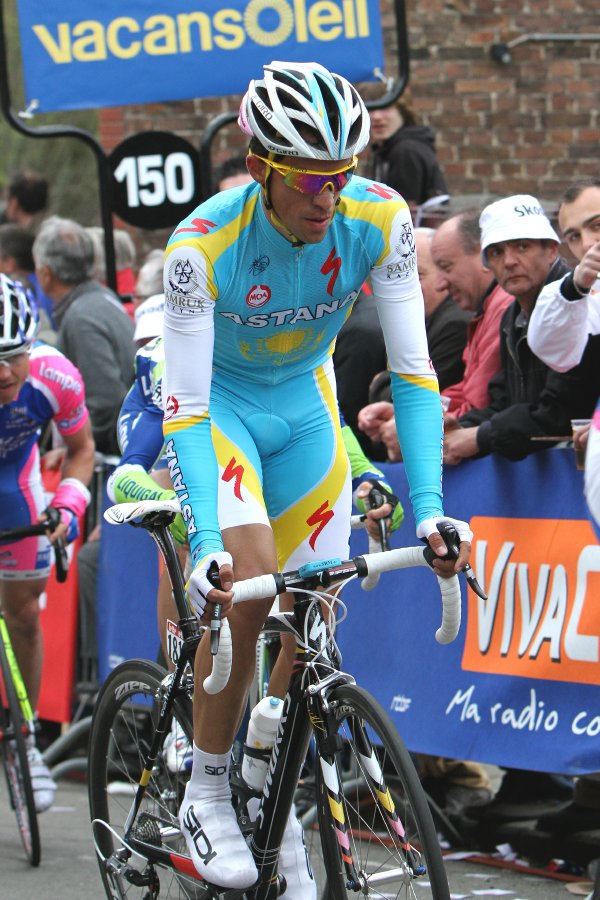
Saxo Bank might be an obvious choice here, but after their domination of the major cobbled affairs, they fell short of expectations in the Ardennes. A better choice for a “team” award might be Astana, a squad who raced impressively throughout the entire spring to take wins in Paris-Nice, L’Eroica, and Liege-Bastogne-Liege. And while Alberto Contador and Alexandre Vinokourov garnered much of the press, Enrico Gasparotto, Maxim Iglinsky, and Andre Grivko quietly became three of the peloton’s most aggressive and dangerous riders, persistently finding their way into race-winning breakaways all spring. If their talented core remains intact for next season, more big wins should come.

Runner-Up: Saxo Bank

Race of the Spring:
The E3 Prijs Vlaanderen was our only opportunity this spring to see all of the cobbled classics’ top favorites battle head to head—albeit one week earlier than we had hoped. In this year’s edition of a race that usually turns-out to be a dress rehearsal for the Tour of Flanders, Cancellara, Tom Boonen, and Juan Antonio Flecha escaped on the Paterberg with about 40 kilometers left to race. Filippo Pozzato missed the move, but made a valiant late-race effort to bring back the 3 leaders, ultimately taking 4th on the day out of a select chase group containing Lars Boom, Bjorn Leukemans, and Sebastian Langeveld. Up front, Cancellara surprised his two breakaway companions, attacking just before the red kite—and a tight left-hander onto a narrow road. The small gap was all the World Time Trial Champion needed to begin his cobbled victory hat trick.

Runner-up: Liege-Bastogne-Liege

Attack of the Spring:
With 10 kilometers to go in this year’s Ghent-Wevelgem, 6 riders remained at the front. Most eyes were on Philippe Gilbert, George Hincapie, and Bernhard Eisel, while a little Belgian riding for Topsport Vlaanderen hung quietly at the back. Entering the narrow, winding streets of Wevelgem, Sep Vanmarcke decided he had waited long enough—he launched a surprising and powerful attack with 3 kilometers remaining. He quickly opened a workable gap before succumbing to leg cramps and the men he left behind. But Vanmarcke wasn’t finished. An after thought following his attack and capture, the plucky Belgian recovered and took advantage of a poorly organized sprint to take second place on the day, beating Gilbert, Hincapie, and Jurgen Roelandts in the process. For the 21-year-old neo-pro, it was the result of a lifetime, and possibly the sign of bigger things to come from a rider who won the amateur version of Ghent-Wevelgem a year earlier.

Runner-up: Cancellara’s Roubaix Glory Ride

The ????? Award:
Is it just me, or did Saxo Bank riders experience an inordinate number of mechanicals this spring? First Breschel in G-W, then Cancellara and Breschel in Flanders, then Cancellara in Roubaix, and one of the Schleck’s in Liege. While cameras do tend to follow the best teams and riders, catching everything that transpires over the course of the race, it seems as if Saxo Bank riders spent almost as much time changing their bikes as they did winning races on them. Aside from Breschel’s flat tire on the way to Wevelgem, everything seemed to be some kind of braking issue. Strange, no?

Runner-up: Dirk Hofman Motorhomes

Biggest Surprise (Rider):
“Controversy” might be the more operative word, but I think it’s safe to say that Alexandre Vinokourov’s win in Liege-Bastogne-Liege caught almost everyone off-guard. I didn’t even know he was racing until he escaped on the descent of the Cotes de la Roche aux Faucons with Katusha’s Alexandr Kolobnev inside the final 20 kilometers. A last-minute addition to the start list, the Kazakh took a quick trip following his win in the Giro di Trentino to make it to Belgium in time for a shot at his second victory in La Doyenne. With the win, Vinokourov added fuel to the fire surrounding the re-entry of riders convicted of doping offenses into the peloton. Vino’s win was perhaps the biggest victory for a rider to have returned to the sport after serving a significant suspension in the modern era, capping-off a spring that also saw wins go to known dopers David Millar, Michele Scarponi, and Ricardo Rocco.

Runner-up: Bjorn Leukemans

Biggest Surprise (Team):
After Astana, one of the most aggressive and surprisingly successful teams in this year’s Belgian classics just might have been BBox. With two stage wins in DePanne and a top-10 result in Flanders, Steve Chainel, Sébastien Turgot, and William Bonnet performed well enough to give the French reason to smile. Couple these successes with wins in the Criterium International and Paris-Nice. Jean-René Bernaudeau just might have the ammunition he needs to keep his sponsors for another season—or more.

Video of the Spring:
This really needs no explanation.

Runner-up:

Special thanks to Youtube’s WorldCyclingChannel2, a great source for race highlights and recaps.

What about you?  What awards would you like to bestow upon a lucky or unlucky recipient?  Share your thoughts and comments below.

Posted in Races | Tagged | Leave a comment

New Column – Ask Ritte!

Ritte Van Vlaanderen was born in Ninove, Belgium on November 5th, 1974, 1-day before Frank Vandenbroucke, a man whose shadow Ritte was never able to escape. Born Ritte Vanderslagmolenbeekegem, Van Vlaanderen changed his name when he moved to Southern California in 1999 after Vandenbroucke’s win in Liege-Bastogne-Liege. As the general manger of the Ritte Van Vlaanderen racing team, he seeks to bring the traditional style and milieu of his homeland to the “Hollywood Homeboys” (his term, not ours) of Southern California. In effort to expand his influence, Ritte graciously agreed to become the centerpiece of a new column at Pavé—Ask Ritte—where he’ll offer his unique perspective on the sport by answering your questions. We’re certain you’ll enjoy it!


To commemorate the exciting new addition to Pavé, I thought a brief interview with Ritte would offer a chance to introduce this intriguing personality to those unfamiliar with his name.

First of all, Ritte, let me say how excited we are that you’ve agreed to be a regular contributor to Pavé—we’re really excited to have your perspective on the sport.

Yes, thank you for having me. And don’t be surprised at your own excitement—it’s a perfectly normal reaction to meeting me. I once caused three pregnant women to go into labor simultaneously by walking into a Lamaze by accident. I was supposed to meet a nurse in the broom closet, but opened the wrong door.

Why did you relocate from Belgium to Southern California?

I visited Los Angeles while on vacation and discovered the great disco scene. I had always dreamed of spending the off-season hanging around the discotheques and picking-up on the beautiful ladies. Then Frank won Liege-Bastogne-Liege in 1999 and there wasn’t enough room in Belgium for two incredibly handsome and stylish champions. Even though Frank was a fraud.

You mean because he was a known doper?

No, because he was a poseur. It was me who first wore white socks as shoe covers and put highlights in my hair. Even Museeuw came to me for the name of my stylist. Everyone loved VDB’s “look,” but he stole it from me.

So you knew him personally?

Sure, we were almost the same age—although I was born first. We grew up near one another and often raced against one another. He always won. But I realized early on that winners did not get the podium girls, so I’d put on a good show and then a few kilos from the line, slide out in a corner or hit a, how do you call it… fire sprayer or something, and the girls would come running.

Wow, so you’re saying you let VDB win? Why?

Well it wasn’t just about the girls. The plan was to let him get a reputation, then beat him in the National Championship. But I let him win too many races; I was never invited to the National Championship. But I still went to the post-race party.

How did you feel when Vandenbroucke’s death was announced?

I was sad of course. All things considered, he was a talented racer and an okay dancer. Every year on his birthday I pour 40 ounces of Duvel on the ground, which is one of the quaint traditions I’ve learned here in Los Angeles—It takes about a bottle and a half.

And what are you up to now?

Since I retired from racing I have kept myself occupied by searching for ancient Roman shipwrecks in along the Santa Barbara coast. I never gave up cycling completely; I would ride my rollers on my yacht. And let me tell you, riding the rollers on the open ocean is serious business, especially while trying to sip a pint without spilling. Anyway, after a few years of life alone on the sea, I came back to LA and started my team.

Why did you start your own team?

Well, you know, a man can only live for himself for so long… I needed a mission in life; I wanted to give something back to society. To do something philanthropic, like rescuing orphans from shark tanks or pulling old ladies from burning school buses. And when I looked at the world around me I saw starving people and poor children and disease and I thought to myself, “Ritte, you know what the world really needs? No Ritte, what? The world needs a classy cycling team.” So I did. It’s called the Ritte van Vlaanderen Cycling Team!

So you feel the answer to the world’s problems is cycling?

Well, maybe not all the problems. But if I can get together 25 young men in a nice-looking racing kit, well maybe that will balance out the sad, sad state of cycling style today—that will make the world a little better, don’t you think? It’s like that movie Stars War, where there’s the bad Force and the good… and now that there is that Footon team, well, let’s just say I’m going to have to step up my efforts.

That’s an interesting stance. Well, before opening the floor to readers’ questions, I’ll start things off with a question of my own: What’s the most important advice you can give to young American racers?

If you can’t win the race, at least win the party. I heard that once from a guy in a San Diego bar, but I think he was talking about NASCAR.

Thanks, Ritte.  We look forward to learning more from you over the coming months.

Come back every other week for tips, advice, and insights from Ritte. Have a question? Email it to paveblog@gmail.com; please type “Ask Ritte” in the Subject line. For more from Ritte and his team, check-out their website and the team’s documentary video series, Behind the Peloton.

Tagged , | Leave a comment

Monday Musette – Liège-Bastogne-Liège Wrap-Up

Yesterday’s Liège-Bastogne-Liège brought the first major portion of the season to a bittersweet close with a win for Alexandre Vinokourov. Vino’s win begs several questions, the answers to which depend upon your perspective. Was yesterday’s result a victory for redemption—proof that even the most tarnished riders can earn a chance for atonement in the sport’s biggest races? Or, was the race nothing more than confirmation that cheaters really do rule the sport—more spit in the eyes of those naive enough to think progress really has been made?

Controversy aside, it will be interesting to see how many of yesterday’s top-10 finishers do the same in this year’s Tour de France. With at least 6 riders capable of high finishes in Paris, it’s easy to see the effects that Liège-Bastogne-Liège’s new place on the calendar has had on the early season programs of Grand Tour riders.

Here’s what we noticed:

1. We begin with the yesterday’s winner, Alexandre Vinokourov. A last-minute starter, Vino must have caught a quick flight from the Tour of Trentino, a race he won in semi-convincing fashion. A cunning rider, Vinokourov took advantage of a lull in the action following the Côte de la Roche aux Faucons, a smart move considering Contador’s presence in the group behind. Were it Iglinsky, Grivko, or any other rider from Astana, we would call the move a textbook example of team tactics: send your second-best rider off the front to set things up for your best rider should the break get caught. Unfortunately for the fans, Astana’s second-best rider just so happens to be one of the sport’s most detested.

Like it or not, Vino deserves credit for the win—he won the race fair and square, so to speak. As for his past, he doped, he was caught, and he was suspended. Now he’s back, and like it or not, we have to grant him the right to win races under the assumption that he’s doing it cleanly. That said, I still think he’s a jerk—and there’s no suspension for that. Just because he wins doesn’t mean we have to like him.

2. As soon as Vino starting missing pulls yesterday, you I knew Katusha’s Alexandr Kolobnev was doomed. I wonder if Vino had convinced him that he had nothing left, or that Gilbert, Valverde, and Evans were closer than they actually were. Whatever the case, Vino’s final attack was perhaps the most obvious race-winning move of the Classics—aside from Cancellara’s Paris-Roubaix pocket angel, that is.

Despite the loss, Kolobnev had fantastic week with aggressive rides in all 3 races from Amstel to Liège. Kolobnev now has top-10 finishes in 3 World Road Races, 2 Olympic Road Races, 2 Liège-Bastogne-Liège’s, 1 Amstel Gold Race, and 1 Tour of Lombardy to go with the win he took in the first edition of L’Eroica in 2007. Clearly, this guy’s due for a major win sometime soon—and he’s only 28.

3. As for Alejandro Valverde, Philippe Gilbert, and Cadel Evans, they did everything they could once they realized they had let the cat in with the pigeons (my favorite Ligget-ism).

Gilbert tried his best to make the race with Andy Schleck on the Roche aux Faucons and attacked valiantly on the Saint-Nicolas hoping for one last miracle. Luckily for Gilbert, he took the win last Sunday in Amstel, otherwise he might have found himself lumped-in with Tom Boonen, the victim of yet another series of near-misses. His consolation prize for the day is the World #1 ranking. Now he heads to the Tour of Romandie—a race he could very well win—before enjoying a well-deserved rest before the Belgian Championships.

Valverde rode solidly but never really seemed in it to win it—as if his head weren’t in the game. He too heads to Switzerland for Romandie—will he finally get his season’s first important win?

And Evans? His rode impressively yesterday, at one time bridging-up solo to Valverde and Gilbert. He now heads to the Giro as one of the top favorites for the overall victory—can he take the first Grand Tour win of his lengthy career?

4. As for Andy Schleck and Alberto Contador, I had hoped that Contador’s acceleration to join Schleck and Gilbert on the Côte de la Roche aux Faucons was going to be the move of the race. Unfortunately, negative racing and a lack of any real impetus from the trio doomed the move, paving the way for Vinokourov’s attack moments later. I was a bit surprised to have seen less of a Saxo Bank presence earlier in the day, perhaps that’s the result of an over-taxed team in major need of a rest before summer.

5. Credit Euskaltel’s Igor Anton for quietly taking top-10 finishes in both Flèche and Liège. Anton’s only 27 and has top-10 finishes in both Romandie and the Vuelta on his resume. Could a breakthrough be in the cards for the young Basque? And speaking of Euskaltel, where’s Samuel Sanchez been hiding?

6. As for the North American contingent, while many had their hopes up for something more, Chris Horner (8th) and Ryder Hesjedal (13th) finished just about where they should have given the competition. Great job, guys.

7. Thomas Voeckler seems to be beginning his summer crescendo for BBox while Team Sky’s Simon Gerrans finally decided to pop his head into the top-15 of a major race this season. Does another solid summer beckon for the Australian?

8. As for Rabobank, the German Paul Martens was the squad’s best finisher following ten days of solid riding going all the way back to the Brabantse Pijl. And Robert Gesink? 16th is a good result for the young Dutchman, but it’s far from where his potential and talent dictate he could be.

9. And what about Italy? Remember the days when the Italians used to rule La Doyenne? Stefano Garzelli was his nation’s top finisher in 18th, while perennial Ardennes contender Damiano Cunego could manage no better than 21st. The Giro begins in less than 2 weeks, the tifosi are becoming anxious.

10. Speaking of Italy, Liquigas underwhelmed me yesterday. Vincenzo Nibali was the team’s top finisher in 29th, while pre-race favorite Roman Kreuziger came home in 51st. Maybe Romandie and the Giro will begin turning the team’s season around.

11. And last but not least, Jérôme Baugnies was Belgium’s second-best rider following an impressive 23rd-place finish. It might not be worth writing home about, but it’s nice to see young riders from smaller teams performing well in the world’s biggest races.

And just like that, the classics are behind us. I’ll be spending the next two weeks wrapping things up while still trying to find some time to take a look at what’s ahead. I’ll also be giving some awards and taking a look back at the effects the various calendar changes had on the racing we witnessed (as well as some suggestions for 2011).

To everyone, thanks for your support and comments over the past several weeks—keep it coming!

As always, share your comments and feedback below!

Posted in Races | Tagged , , | Leave a comment

Liège-Bastogne-Liège Preview

The Spring Classics come to a close this weekend with the 96th edition of La Doyenne, Liège-Bastogne-Liège. Covering 10 of the Belgian Ardennes’ most legendary ascents, this year’s event looks certain to be an exciting and memorable finale to the first major phase of the 2010 season. This year’s start list features several men capable of taking the win, including a handful of riders we might be watching come July in this year’s Tour de France. For now, here’s a run-down of the top men to watch this Sunday.

All photos by Tim Van Wichelen
5-Côte Favorites

The last Belgian to win Liège-Bastogne-Liège was Frank Vandenbroucke in 1999. While Philippe Gilbert’s win in last Sunday’s Amstel Gold Race was a welcome sight to Belgian fans everywhere, it will likely become an afterthought should Gilbert come through Sunday in Ans. Gilbert’s enjoying the form of his life right now, calling to mind his indomitable run last autumn from Paris-Tours through the Tour of Lombardy. Gilbert “took it easy” on Wednesday in Flèche Wallonne, finishing in a group with the other main favorites a handful of seconds behind the winner, Cadel Evans. Gilbert’s talents are naturally suited to the challenging parcours Sunday—the climbs suit an aggressive rider possessing a sharp uphill acceleration. With the maturation of teammate Jurgen Vandenbroeck into a super-domestique, Gilbert might just have the found the missing piece separating him from a win in his first spring Monument.

Andy Schleck won last year’s Liège-Bastogne-Liège on his way to a 2nd-place finish in the Tour. He returns this year well-prepared to take a repeat win. Following quietly impressive performance in Amstel and Flèche, Schleck hopes his talented team—led by his older Frank—can keep him out of trouble until the major selections are made. He too is riding at a top-level as indicated by his attacks in the Gold Race. I suspect Schleck will be riding with a bit of added motivation this year, as his main Tour rival, Alberto Contador, takes the line as well. A win over Contador would certainly give Schleck a mental edge heading into the summer—something he might appreciate when the battle with Contador reconvenes in July.

4-Côte Favorites

Two-time Liège-winner Alejandro Valverde comes to this year’s event hoping to move one step closer to tying Eddy Merck’s record 5 victories. Valverde’s had a solid season, but has yet to score a major victory, finishing 2nd in both Paris-Nice and the Tour of the Basque Country. To take the win, Valverde needs to find a better way to utilize the talents of current world #1, Luis Leon Sanchez. If Valverde and his compatriot can successfully play-off one another’s talents, Caisse d’Epargne could take an important win as it continues to try and entice a new title sponsor.

Damiano Cunego has yet to bag the Ardennes victory he has sought for the past several years. Usually he peaks too soon; this year though, he seems to be hitting his stride at just the right time. Better still, Cunego’s not the #1 favorite for Sunday, something relieving a bit of the pressure the Italian’s faced in the past. Italy hasn’t won many important races this year; Cunego hopes to change that.

What does Cadel Evans have to do to earn our confidence and respect? The World Title? He got lucky. Flèche Wallonne? Contador choked on the Mur. But what about Liège-Bastogne-Liège? I’ll believe it when I see it. Well, if he rides as intelligently as he did Wednesday, as confidently as he did in last year’s Tour of Lombardy, and as aggressively as he did in Mendrisio, then “see it” we might. No, I don’t like Cadel Evans either, but we don’t have to like him to respect his chances Sunday.

Two races, two attacks, and two captures approaching the final ascent to the finish line—Katusha’s Alexandr Kolobnev is due for a win this week. He reminds me of Philippe Gilbert from a few years ago—incredibly strong, immensely aggressive, but a bit too eager to take things into his own hands. Often attacking at inappropriate times, Kolobnev needs a bit more patience and maybe a little more confidence in his chances against the other major favorites should he wait. That said, in Amstel and Flèche he was attacking a large group; tomorrow he should have the luxury of attacking a smaller, more select group. Without a large coalition able to reel him back in, Sunday could finally be Kolobnev’s day.

3-Côte Favorites

Like Kolobnev, Roman Kreuziger is another rider who might benefit from a bit of patience. Incredibly talented, Kreuziger often tries to force things a bit too soon rather than wait to try his chances in the finale. Liquigas might try using Vincenzo Nibali sooner, perhaps putting him a break inside the final 40 kilometers, thus forcing Kreuziger to follow the moves by other teams. When Nibali’s caught, that’s the time for the young Czech to make his move. If he manages to take the win, consider his move to Omega Pharma-Lotto in 2011 all wrapped-up.

Alberto Contador’s 3rd-place finish in Wednesday’s Flèche Wallone might be the best he can hope for this week. While I would love to see a Tour de France champion take a spring classic, I think Contador’s too inexperienced in races of this sort. Classics require a different tactical approach than stage races—being the strongest does not always mean you’ll win. That said, Contador’s team is strong and his resolve has been strengthened following what must have been an embarrassing defeat Wednesday. He says he’s racing only for the experience; to me, that just proves he’s racing to win.

Katusha’s Joaquin Rodriguez rebounded from a poor performance at the Amstel Gold Race to take 2nd-place in Wednesday’s Flèche Wallonne. Like his teammate Kolobnev, Rodriguez is a talented rider with lots of top results, but few major wins. His solid performances in last year’s Ardennes classics and Worlds earned him a new contract and a new team, but it remains to be seen if the Spaniard has the goods to take the next step. Kolobnev and Sergei Ivanov are more aggressive than Rodriguez, traits that suit them in a race like Liège. While Rodriguez could conceivably react and cover his way into the final selection, he’ll have to attack at some point if he wants to take his first big win.

At 38, Radio Shack’s Chris Horner seems to be getting better with age. After 2nd place in the Tour of Sardinia, Horner went one better at the prestigious Tour of the Basque Country before scoring top-10 results in Amstel and Flèche. A smart aggressive rider, Horner’s just the man to take advantage of the fact that few consider him a realistic candidate for the win. With Popovych, Kloden, and Zubeldia, Horner’s team has enough experience and talent to keep him out of trouble early, positioning him to play a role in the finale.

2-Côte Favorites

Sergei Ivanov’s the last of 3 Katusha riders deserving consideration for Sunday. Buoyed by strong performances in last year’s Ardennes classics, Ivanov took a 10-day training camp in the Canary Islands following the Tour of Flanders just to prepare for this year’s events. Like Kolobnev, Ivanov’s showed no lack of willingness to attack, animating the finales at both Amstel and Flèche Wallonne—as to whether he was softening the race for Kolobnev and Rodriguez or trying to play his own card remains unclear. Should he make the selection on La Redoute; he’ll warrant careful attention from the favorites, for he’s been racing like he has nothing to lose.

I was starting to lose faith in Robert Gesink’s ability to win major one-day races; and then I reminded myself that he’s only 23. Clearly there’s time for the Dutchman to develop the confidence he needs in races like Amstel and Liège. His Rabobank squad is bolstered by the addition of Denis Menchov who’s clearly riding to top-off his form for next month’s Giro. If both can stay upright, might Menchov be enough to help Gesink become Liège’s first Dutch winner since Adrie Van der Poel in 1988?

Vincenzo Nibali’s a bit of an enigma. He receives little press outside of Italy, but has quietly risen through the ranks to be an outside podium contender in this year’s Tour de France. Following an aggressive performance at Milan-San Remo, Nibali continued to impress with solid rides at Amstel and Flèche. That said, it’s hard to tell if Nibali’s racing to win, or simply racing to train for July, as his attacks often seem out of place and his top results come by following wheels. He’s just as likely to finish on the podium Sunday as he is to spend all day in a break.

Finally, Canadian Ryder Hesjedal comes to Liège-Bastogne-Liège hoping to score Garmin’s first win in one of cycling’s 5 Monuments. Hesjesdal’s been riding well as of late, scoring high finishes in the Basque Country, Amstel, and Flèche. Ultimately, it’s hard to predict Hesjedal’s chances Sunday. Does he have the talent to defeat men like Schleck, Gilbert, and Valverde? The only North American to win Liège was Tyler Hamilton in 2003 when he several favorites to take the victory in Ans. With a young, but talented team under the veteran leadership of Christian Vande Velde, Hesjedal might just have what it takes.

As for my prediction, with so many favorites it’s hard to choose. In the end, I think Gilbert will do whatever’s necessary to end the spring with a Belgian victory. Valverde will win the sprint for 2nd-place, while a defeated Andy Schleck will sit-up just before the line, allowing Chris Horner to take 3rd.

Who are your picks for Sunday? Share them below.

Posted in Races | Tagged , | Leave a comment

Flèche Wallonne Wrap-up

If you’re a frequent visitor to Pavé, you might have noticed a rather interesting conversation taking place via the comments to my Flèche Wallonne Preview. Apparently Cadel Evans’ rainbow jersey was not enough to convince many of you that a renaissance might beckon for the temperamental Australian. Unfortunately it’s not always possible for me to respond to reader comments from work, so I was forced to suffer the slings and arrows of your discontent from the sidelines—until Evans won, that is.

Here’s what else we noticed:

1. Don’t get me wrong; I’ve never been a big fan of Cadel Evans either. But that doesn’t prevent me from giving credit where credit is due. Evans timed his sprint to perfection, catching and passing a fading Alberto Contdor just meters from the line. I liked that Evans gave credit to his DS, John Lelangue, for insisting that he pre-ride the climb despite the fact that Evans has raced it several times in the past. Now the question remains: just how well can Evans do Sunday in Liege?

2. As for Alberto Contador, yesterday’s 3rd-place finish should be filed under “tactical mistakes”. While we can forgive Euskaltel’s Igor Anton for his suicide move up the Mur de Huy; Contador deserves criticism for overestimating himself and underestimating the climb. I feel like I can actually see the moment when he realizes, “S***, the line’s not where I thought it was!” Contador gets a shot at redemption Sunday, but for a man not known as a master strategist, a victory might prove to be just out of his reach.

3. Katusha’s Joaquin Rodriguez atoned for his poor showing last Sunday with a fine 2nd-place in Flèche. That said, given the aggressive rides by Sergei Ivanov and Alexandr Kolobnev, one cannot help but think the Russian squad wanted more. Credit Ivanov and Kolobnev for doing their best take matters into their own hands on several occasions. Kolobnev’s move was reminiscent of his last gasp attack in the waning moments of the Amstel Gold Race. Two races, two riders, two identical tactical displays—will things fall into place on Sunday?

4. Damiano Cunego went one better than his 6th-place in the Amstel Gold Race, an indicator that he might have timed his form just right for Sunday. It’s hard to believe, but Italy has yet to win a classic this year. That could change Sunday if Cunego gets his way.

5. The first “group” crossed the line 11 seconds behind Evans, including major favorites Philippe Gilbert, Alejandro Valverde, and Andy Schleck. These men are right on schedule for what looks to be one of the most exciting battles of the season on Sunday. Chris Horner and Ryder Hesjedal were in this group too—could a North American score an upset Sunday?

6. Landbouwkrediet’s Bert De Waele deserves praise for another fine result following his 4th-place ride Sunday in Amstel. With another top-10 performance this Sunday this Belgian might find himself in the Pro Tour next year—even at the ripe old age of 34!

7. Vincenzo Nibali climbed-in with Gilbert’s group as well—might I have underestimated his abilities in races of this sort? As long as Roman Kreuziger continues to race like a hyperactive junior, Nibali will have free rein to play his cards in race finales.

8. Robert Gesink and Daniel Martin arrived with the next gruppetto, 19 seconds back. I’m beginning to have less and less faith in Gesink’s abilities in major one-day races. As for Martin, he could prove a valuable asset to Hesjedal Sunday—the Irishman is clearly a super-talent.

And that’s that. As for the parcours, I guess some things never change—the Mur de Huy has always had an uncanny ability to separate the wheat from the chaff.

Oh gosh, I’m starting to sound more and more like Phil Liggett.

And if you have a chance, head over to Bicycling Magazine and check-out my new column as the Backseat DS. I’d love some feedback!

Have a great day–share your comments below.

Posted in Races | Tagged , | Leave a comment